USE CASES

Energy designed around the conditions of a real asset.

We do not begin by selecting modules. First, we examine where an asset uses energy, which surfaces and constraints it has, and what the grid connection can support. Only then do we choose Floating PV, rooftop, ground-mounted solar, a carport or energy storage.

01 · FLOATING PV

First: Floating PV, where water can work close to demand.

01 · WATER

Water utilities and treatment plants

A settlement basin or technical reservoir can become a surface for Floating PV, while the energy can work on site for pumps, water treatment and water-sector processes.

Water utilities and treatment plants — How the system can work
Who it is for

Water-treatment plants, wastewater facilities, water utilities and municipalities with a technical water asset and daytime electricity demand.

What we solve

Plant land and protection zones can be limited, while pumping and treatment consume electricity in the same hours that PV generates it.

How the system can work

System elements

  • Wall or shore anchoring that accounts for water-level movement
  • A floating platform with UV-resistant components and modules matched to the basin geometry
  • A service walkway or another safe maintenance-access arrangement
  • A cable route to the switchgear and on-site use by the process
What is enough for a first assessment

Starting information

  • Dimensions and basic geometry of the basin
  • Annual electricity use or a 15-minute demand profile
  • Grid-connection and near-basin infrastructure information
What we prepare next

An initial platform layout, capacity estimate and economic model—including an energy-storage option—still require technical, regulatory and grid confirmation.

02 · AGGREGATES

Aggregate quarries and post-extraction water

A post-extraction water body can generate energy near sorting lines, crushers, conveyors and pumps—without taking land required for extraction.

Aggregate quarries and post-extraction water — How the system can work
Who it is for

Aggregate quarries and processing plants with a post-extraction reservoir and material daytime electricity use.

What we solve

Shore slopes, bed conditions, water-level changes, shore access and a safe cable route to the plant all matter.

How the system can work

System elements

  • A floating platform assembled at the shore and introduced to water in stages
  • Anchoring matched to the shore, slopes, bed and water-level movement
  • A short cable route to the plant switchgear
  • The ability to phase the installation as the operation develops
What is enough for a first assessment

Starting information

  • Approximate surface area and basic reservoir information
  • Annual site electricity use or a demand profile
  • Connection, distance-to-load and shore-access information
What we prepare next

We prepare a preliminary platform layout, capacity estimate and phasing options; yield, anchoring and permitting are confirmed for the specific location.

02 · BUSINESS SOLAR

Then: solar energy on roofs, parking and available land.

03 · INDUSTRY

Manufacturing sites, warehouses and cold stores

Production equipment, compressors, cooling and logistics often operate during the day. We therefore assess the full asset: factory roofs, parking, available land and potential BESS.

Manufacturing sites, warehouses and cold stores — How the system can work
Who it is for

Manufacturing sites, logistics centres, warehouses, cold stores and businesses with material daytime energy demand.

What we solve

One technology rarely uses an asset’s full potential. System size should follow demand, grid connection, roof capacity and future expansion plans.

How the system can work

System elements

  • Rooftop PV after checking load capacity and roof condition
  • A carport above employee or fleet parking
  • Ground-mounted PV on land that does not conflict with production or logistics
  • BESS where the operating model, connection and demand justify energy storage
What is enough for a first assessment

Starting information

  • 15-minute meter data or 12 months of electricity bills
  • A site plan showing roofs, parking and available land
  • Connection-capacity information and the main energy loads
What we prepare next

We compare rooftop, carport, ground-mounted or combined options and identify the assumptions for the next design and economic stage.

04 · PARKING

Solar carports for businesses and institutions

A parking area can become an energy source, shelter for vehicles and a basis for EV charging—without taking a new plot for the installation.

Solar carports for businesses and institutions — How the system can work
Who it is for

Businesses, offices, retail, logistics operators and institutions with existing parking and an interest in energy, user comfort and electric mobility.

What we solve

The structure has to preserve convenient parking, drainage, safe foundations and the possibility of integrating electrical infrastructure.

How the system can work

System elements

  • Central columns or another structural layout matched to parking bays
  • A PV roof that also functions as a weather canopy
  • Drainage arranged along the structure
  • EV chargers and electrical infrastructure planned together with the carport
What is enough for a first assessment

Starting information

  • Parking plan: number of bays, traffic layout and dimensions
  • Annual electricity use and an intended EV-charging model
  • Grid connection, ground and construction-constraint information
What we prepare next

We prepare an initial structural layout, PV capacity and energy-use model; foundations and structural calculations are confirmed in the next design stage.

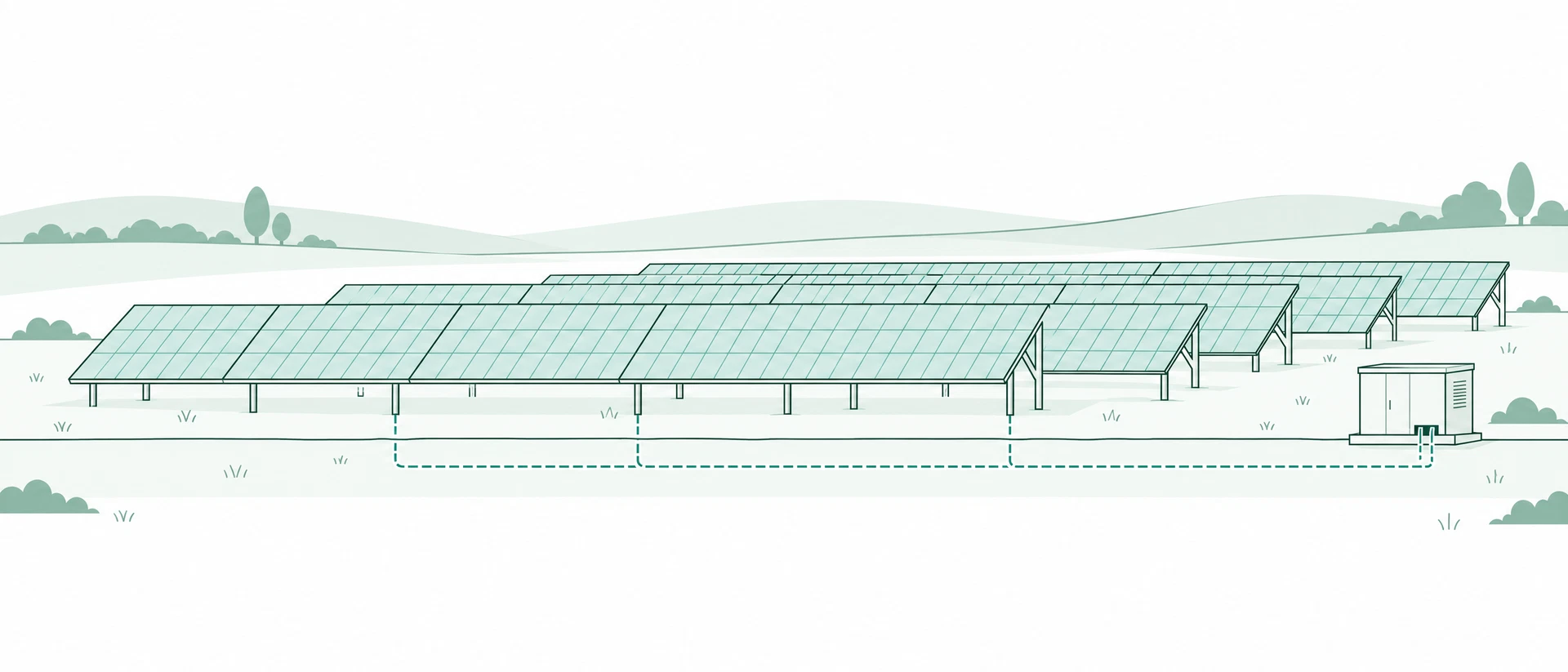
05 · LAND

Landowners and investors

Ground-mounted PV can use available land from hundreds of kilowatts to multi-megawatt scale. Its value, however, depends on the grid connection, plot conditions and intended energy model.

Landowners and investors — How the system can work
Who it is for

Landowners, investors and businesses with land that is not needed for current production, logistics or expansion.

What we solve

Available land does not automatically make a project ready. Plot conditions must be compared with a realistic grid connection, demand profile or energy-sales model.

How the system can work

System elements

  • Module layout matched to boundaries, land conditions and access
  • Grid connection and cable route assessed before choosing scale
  • The ability to connect generation to energy used by the business
  • A delivery route prepared for formal, technical and economic decisions
What is enough for a first assessment

Starting information

  • Location and basic plot information
  • Grid-connection information or connection conditions
  • Investment aim: on-site energy, capacity expansion or energy-sales model
What we prepare next

An initial concept shows possible scale options and the next steps, but it must be followed by a full plot, grid, permitting and economic assessment.

06 · FUEL

Fuel stations and service assets

Refrigeration, lighting, air conditioning, food service and car washing create steady daytime demand. PV can use surfaces the station already has.

Fuel stations and service assets — How the system can work
Who it is for

Fuel-station networks, independent stations, car washes and service facilities with long operating hours and steady electricity demand.

What we solve

The design must combine generation with daily operations, Ex-zone constraints, fire safety, cable routing and the available connection capacity.

How the system can work

System elements

  • PV on the fueling canopy, designed with Ex zones in mind
  • PV on the shop, car-wash or technical-area roof
  • A parking carport with an EV-charging option
  • Optional BESS assessed against the demand pattern and connection
What is enough for a first assessment

Starting information

  • The last 12 months of electricity bills or 15-minute data
  • Photos or a plan of the station, including roofs, canopy and parking
  • Grid-connection information and key safety constraints
What we prepare next

We develop a technical and economic route that subsequently requires formal review and coordination with the asset’s operating conditions.

FOUR ENERGY ROUTES

The technology follows the asset—not the other way around.

One investor can have several useful PV surfaces. We combine them into one technical route when it helps energy work closer to demand.

01 · FPV

Floating PV

A platform on a retention, industrial or post-extraction water body. The land remains available to the owner.

Water utilities · industry · municipalities · aggregate quarries
02 · LAND

Ground-mounted solar

A system from hundreds of kilowatts to multi-megawatt scale, designed around the plot, grid connection and energy-use model.

Landowners · investors · businesses
03 · CARPORT

Solar carport

A canopy above an existing parking area that generates energy and can supply EV charging.

Offices · retail · logistics · institutions
04 · ROOF

Rooftop solar

PV on factories, warehouses and buildings, matched to the structure and demand profile.

Manufacturing sites · warehouses · halls · fuel stations
FIRST STEP

Start with the data that actually changes the project.

Send the location, a short description of the asset, an energy-demand profile or bills, water-body or land information, and grid-connection conditions. We will identify which route is worth modelling first.

Discuss an asset